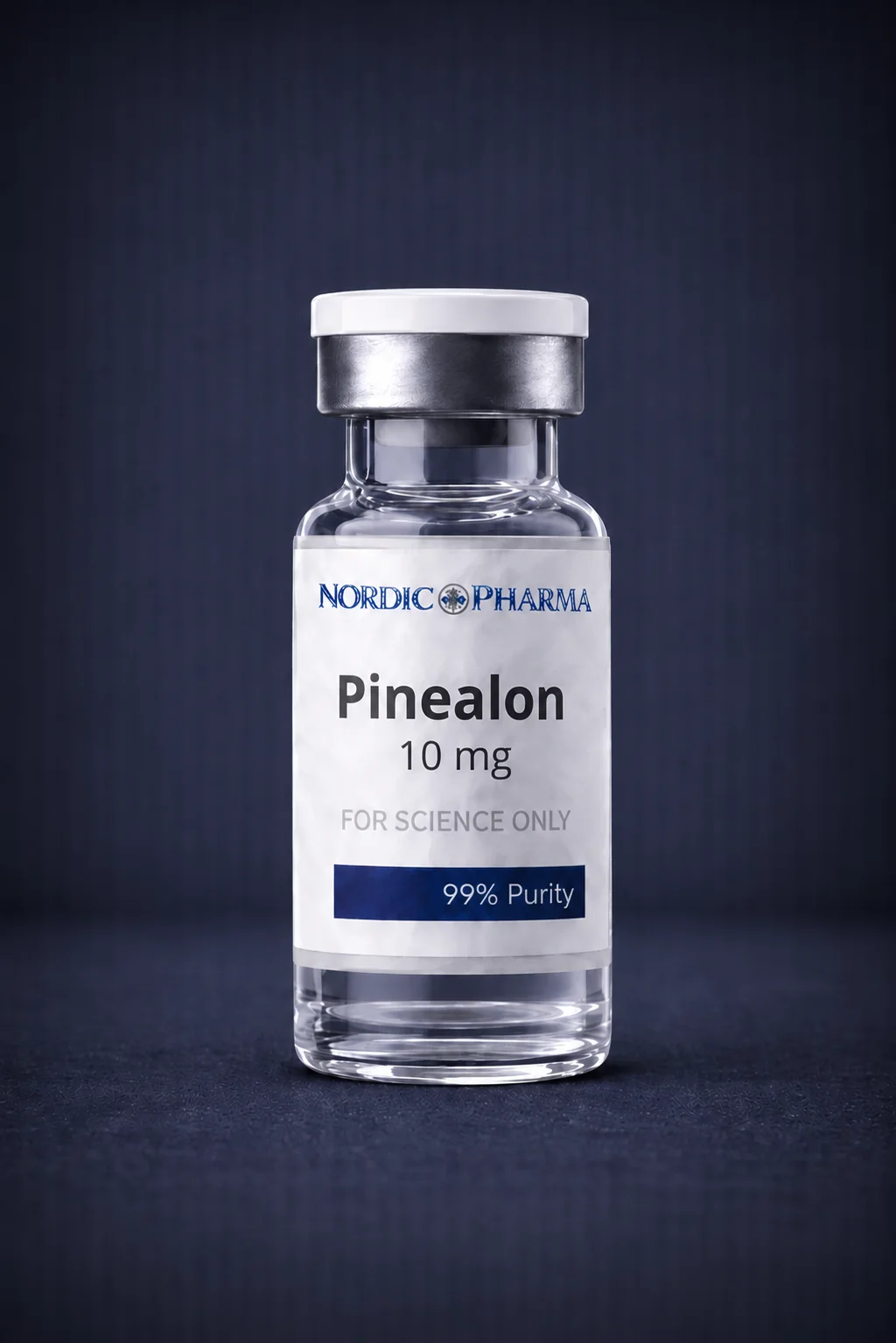
Pinealon | 10 vials
Product Overview Pinealon is a synthetic tripeptide composed of three amino acids: L-glutamic acid, L-aspartic acid, and L-arginine (sequence: Glu-Asp-Arg or EDR) . It was developed as a short-chain analog of the bovine cerebral cortex-derived polypeptide complex Cortexin . The peptide belongs to a family of "cytomedins" or bioregulators studied primarily within the Russian scientific literature for neuroprotective and geroprotective effects . Proposed Mechanism of Action Unlike many peptides that act through cell surface receptors, Pinealon's small molecular size allows it to penetrate cellular and nuclear membranes to interact directly with DNA and chromatin . This direct genomic interaction is believed to modulate gene expression, influencing the synthesis of proteins involved in neuronal repair, antioxidant defense, and apoptosis regulation . Key mechanistic features include: Nuclear Penetration: Studies using fluorescence-labeled EDR have shown that the peptide can enter HeLa cell nuclei and bind specific DNA sequences in vitro . DNA Interaction: The charged amino acid residues in its structure suggest potential for interaction with nucleic acids, possibly influencing chromatin structure and gene promoter accessibility . Epigenetic Regulation: Pinealon may influence the expression of enzymes like 5-tryptophan hydroxylase (involved in serotonin synthesis) through epigenetic modifications . Key Research Areas Cognitive Function & Learning: Preclinical studies have shown Pinealon can improve spatial orientation and learning ability in rodent models. In a direct comparison with Cortexin, Pinealon demonstrated a prevalent positive effect on navigation learning in the Morris water maze . Neuroprotection: Pinealon has been shown to protect neurons from oxidative stress and excitotoxicity. It prevents reactive oxygen species (ROS) accumulation and suppresses the activation of ERK 1/2 signaling pathways . Cellular Health & Aging: The peptide is studied as a potential geroprotector, with research suggesting it may stimulate functional activity of brain tissue cellular elements and reduce spontaneous cell death . Circadian Rhythm Research: As a pineal gland-derived peptide, Pinealon is also of interest in studies related to circadian rhythms and sleep-wake cycles . Key Features Sequence (One Letter Code): EDR Sequence (Three Letter Code): H-Glu-Asp-Arg-OH Molecular Formula: C₁₅H₂₆N₆O₈ Molecular Weight: 418.40 g/mol CAS Number: 175175-23-2 Purity: >98% (HPLC tested) Form: Lyophilized powder Storage: Store in a cool, dry place at -20°C for long-term storage . ⚠️ Important: This product is intended for research purposes only. Not for human consumption or clinical use. As of 2026, no completed randomized controlled trials of Pinealon in humans have been published in peer-reviewed English-language journals .
SKU: WOO-3992
Product Overview Pinealon is a synthetic tripeptide composed of three amino acids: L-glutamic acid, L-aspartic acid, and L-arginine (sequence: Glu-Asp-Arg or EDR) . It was developed as a short-chain analog of the bovine cerebral cortex-derived polypeptide complex Cortexin . The peptide belongs to a family of "cytomedins" or bioregulators studied primarily within the Russian scientific literature for neuroprotective and geroprotective effects . Proposed Mechanism of Action Unlike many peptides that act through cell surface receptors, Pinealon's small molecular size allows it to penetrate cellular and nuclear membranes to interact directly with DNA and chromatin . This direct genomic interaction is believed to modulate gene expression, influencing the synthesis of proteins involved in neuronal repair, antioxidant defense, and apoptosis regulation . Key mechanistic features include: Nuclear Penetration: Studies using fluorescence-labeled EDR have shown that the peptide can enter HeLa cell nuclei and bind specific DNA sequences in vitro . DNA Interaction: The charged amino acid residues in its structure suggest potential for interaction with nucleic acids, possibly influencing chromatin structure and gene promoter accessibility . Epigenetic Regulation: Pinealon may influence the expression of enzymes like 5-tryptophan hydroxylase (involved in serotonin synthesis) through epigenetic modifications . Key Research Areas Cognitive Function & Learning: Preclinical studies have shown Pinealon can improve spatial orientation and learning ability in rodent models. In a direct comparison with Cortexin, Pinealon demonstrated a prevalent positive effect on navigation learning in the Morris water maze . Neuroprotection: Pinealon has been shown to protect neurons from oxidative stress and excitotoxicity. It prevents reactive oxygen species (ROS) accumulation and suppresses the activation of ERK 1/2 signaling pathways . Cellular Health & Aging: The peptide is studied as a potential geroprotector, with research suggesting it may stimulate functional activity of brain tissue cellular elements and reduce spontaneous cell death . Circadian Rhythm Research: As a pineal gland-derived peptide, Pinealon is also of interest in studies related to circadian rhythms and sleep-wake cycles . Key Features Sequence (One Letter Code): EDR Sequence (Three Letter Code): H-Glu-Asp-Arg-OH Molecular Formula: C₁₅H₂₆N₆O₈ Molecular Weight: 418.40 g/mol CAS Number: 175175-23-2 Purity: >98% (HPLC tested) Form: Lyophilized powder Storage: Store in a cool, dry place at -20°C for long-term storage . ⚠️ Important: This product is intended for research purposes only. Not for human consumption or clinical use. As of 2026, no completed randomized controlled trials of Pinealon in humans have been published in peer-reviewed English-language journals .