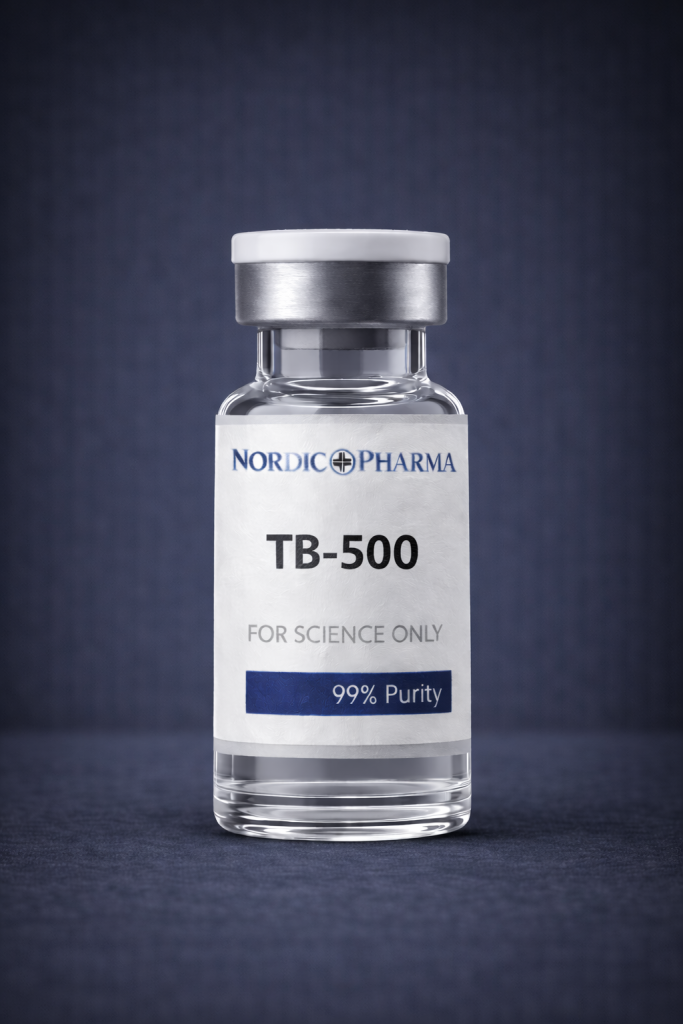
TB-500 | 10 vials
TB-500 is a synthetic peptide analogue of thymosin beta-4, a naturally occurring 43-amino acid polypeptide that is highly conserved across species and found in elevated concentrations in platelets, macrophages, and wound healing tissues . The synthetic version specifically represents the N-terminal acetylated 17-23 fragment of thymosin beta-4, which retains the biological activity of the full molecule .
Physicochemical Properties
| Property | Specification |
|---|---|
| CAS Number | 885340-08-9 |
| Molecular Formula | C₃₈H₆₈N₁₀O₁₄ |
| Molecular Weight | 889.01 g/mol |
| Synonyms | Thymosin Beta-4 fragment (17-23), N-acetyl-L-leucyl-L-lysyl-L-lysyl-L-threonyl-L-α-glutamyl-L-threonyl-L-glutamine |
| Purity | ≥99% |
| Appearance | Lyophilized powder |
| Storage | Store at -20°C. Protect from light and moisture |
Mechanism of Action
TB-500 exerts its biological effects through multiple complementary pathways, making it a pleiotropic regulator of tissue repair and regeneration .
Actin Polymerization and Cellular Motility: The primary molecular mechanism of TB-500 involves regulation of actin dynamics through its high-affinity binding to monomeric G-actin . This interaction prevents actin polymerization and promotes actin sequestration, thereby facilitating cellular migration and morphological changes essential for wound healing and tissue repair . By upregulating actin polymerization, TB-500 enhances cell migration to sites of muscle and tendon injury, accelerating tissue repair processes .
Angiogenesis Stimulation: TB-500 demonstrates potent angiogenic properties through multiple mechanisms, including stimulation of endothelial cell migration, proliferation, and tube formation . The peptide promotes formation of new capillary networks, which are essential for adequate tissue perfusion and nutrient delivery during healing processes . Research shows TB-500 promotes endothelial cell differentiation and angiogenesis in dermal tissues .
Anti-Inflammatory Actions: Research has revealed that TB-500 possesses notable anti-inflammatory properties through modulation of cytokine production profiles and promotion of inflammatory resolution pathways . The peptide appears to shift macrophage polarization from pro-inflammatory M1 phenotypes toward anti-inflammatory M2 phenotypes, thereby facilitating tissue repair and regeneration . It also decreases inflammation in damaged tissues .
Collagen Synthesis and Reduced Fibrosis: In clinical evaluations, TB-500 is linked to stimulation of collagen production, integral to tendon and ligament healing . Furthermore, studies observed reduced scar tissue and fibrosis in treated areas, potentially improving long-term function and reducing re-injury risk . The peptide exhibits anti-fibrotic activities by inhibiting the Akt signaling pathway .
Additional Mechanisms:
-
Cardioprotective effects: May preserve cardiac muscle viability following ischemic injury
-
Neuroprotective properties: May facilitate neural regeneration through enhancement of axonal growth and synaptic plasticity
-
Keratinocyte migration: Promotes skin cell migration for wound healing
Research Applications
Muscle Regeneration and Repair:
Human research on TB-500 shows promise in accelerating muscle regeneration following acute injuries . In several controlled trials and observational studies, TB-500 treatment was associated with :
| Faster recovery | Reduced downtime from muscle strains and tears |
| Improved functional outcomes | Better strength restoration post-injury |
| Reduced fibrosis | Less scar tissue formation |
| Enhanced healing quality | Improved tissue integrity |
One multicenter study involving older adults found that supplementation with TB-500 after surgical muscle trauma led to quicker restoration of muscle strength and decreased healing time compared to placebo .
Tendon and Ligament Repair:
A growing field of TB-500 research focuses on its effects on tendon healing, a critical aspect for both athletes and aging populations . In human trials, the peptide has shown potential to :
-
Reduce post-surgical immobilization period
-
Accelerate return to mobility and activity
-
Lower rates of tendon re-rupture
Wound Healing:
TB-500 promotes wound healing through multiple mechanisms :
-
Enhances keratinocyte migration
-
Promotes endothelial cell differentiation
-
Stimulates angiogenesis in dermal tissues
-
Increases collagen deposition
-
Decreases inflammation
Cardiovascular Applications:
TB-500 has demonstrated significant cardiovascular benefits in preclinical investigations, particularly in models of myocardial injury and cardiac remodeling . The peptide may help preserve cardiac muscle viability following ischemic injury and could potentially improve cardiac functional parameters . Studies suggest that TB-500 may attenuate scar tissue formation following myocardial infarction and could promote neovascularization within ischemic cardiac tissue .
Neurological Applications:
Both TB-500 and related peptides have demonstrated some therapeutic potential in neurological applications, though this represents a less extensively studied area . TB-500 has demonstrated neuroprotective effects in experimental models of neurological injury through modulation of inflammatory responses within the central nervous system and promotion of neuronal survival .
Sarcopenia Intervention (Age-Related Muscle Loss):
Sarcopenia, the progressive loss of muscle mass and strength with aging, presents a significant clinical challenge . Emerging studies have begun to investigate TB-500 as a potential intervention :
-
Improved muscle fiber regeneration in older adults
-
Trends toward enhanced grip strength and muscle endurance
-
No substantial side effects reported in short-term trials
Although findings are preliminary, this line of research offers promise for expanding therapeutic options to combat frailty and immobility in older populations .
Current Evidence for Efficacy
Preclinical Studies:
The majority of evidence supporting the therapeutic efficacy of TB-500 derives from extensive preclinical investigations conducted in various experimental models . These studies have generally demonstrated positive therapeutic outcomes in :
-
Wound healing models
-
Cardiac protection studies
-
Muscle repair across multiple species
-
Myocardial infarction models (reduced infarct size, improved cardiac function, enhanced neovascularization)
-
Skeletal muscle injury (accelerated healing, reduced fibrosis, improved functional recovery)
Human Evidence:
Human research on TB-500, while more limited than preclinical data, is growing . Current human evidence includes :
-
Controlled trials: Several studies show faster recovery from muscle strains and improved functional outcomes
-
Observational studies: Reduced muscle fibrosis and scar tissue noted
-
Post-surgical recovery: Quicker restoration of muscle strength in older adults
-
Tendon repair: Reduced immobilization period and lower re-rupture rates
However, most human studies have limitations including small sample sizes, short follow-up duration, and lack of standardized outcome measures . No high-quality randomized clinical trials for musculoskeletal injury have been completed, and some registered human trials were abandoned or never published .
Safety Profile
Reported Side Effects and Tolerability:
In human trials, TB-500 has exhibited good tolerability in the short term, with most adverse events being mild and transient :
-
Localized redness or swelling at injection site
-
Occasional mild headache or fatigue
-
Rare cases of allergic reaction
No reports of serious systemic side effects or organ toxicity have been documented to date . Long-term safety, however, remains under-studied .
Serious Concerns and Unknown Risks:
Medical professionals have identified several serious concerns :
-
Unknown long-term risks
-
Potential for uncontrolled tissue growth
-
Possible immune reactions
-
Risk of contaminated or impure products from unregulated suppliers
-
Not approved for medical use
-
No established dosing guidelines
Interactions and Contraindications:
Potential drug interactions are not fully characterized, though caution is recommended when used alongside :
-
Immunosuppressive therapies
-
Anticoagulants, due to potential effects on blood vessel growth and wound healing
Important Safety Warnings :
-
Do not use TB-500 in place of evidence-based rehabilitation for serious injuries
-
Not approved for routine clinical use in most regions
-
Long-term health impacts remain unknown
-
Banned by the World Anti-Doping Agency (WADA) in professional sports
Regulatory Status
FDA Status:
-
TB-500 is NOT FDA approved for any medical use
-
The US FDA has issued warning letters to companies marketing TB-500 products for human use, classifying them as unapproved new drugs sold in violation of the Federal Food, Drug, and Cosmetic Act
-
In 2023, the FDA added TB-500 to a list of substances that should not be compounded due to safety risks
-
Products containing TB-500 are not generally recognized as safe and effective for therapeutic uses
Sports Regulations: TB-500 is banned by the World Anti-Doping Agency (WADA) . Athletes should be aware that use constitutes doping.
Legal Status: TB-500 is not approved by the FDA for medical use in the United States . Despite statements on product labeling marketing products for "research purpose only" and "not for human consumption," evidence from websites often establishes that these products are intended to be drugs for human use .
Dosing Considerations (Research Context)
Most clinical studies use subcutaneous or intramuscular administration, with dosages ranging from 2 to 10 mg per week, typically given over a 4-6 week period . Never self-administer TB-500 without medical oversight, as compounding and purity standards can vary .
Important Notice
FOR RESEARCH USE ONLY. NOT FOR HUMAN USE, THERAPEUTIC, OR DIAGNOSTIC APPLICATIONS.
TB-500 is not FDA approved for any indication and is banned by the World Anti-Doping Agency (WADA). This product is intended for laboratory research purposes only. Researchers should consult relevant literature and institutional guidelines for proper usage. Adverse effects are possible due to unregulated manufacturing, contamination, or unknown clinical safety . Always consult a qualified healthcare professional before considering any peptide compound for human use.
Select Option & Quantity
Key Benefits
- High purity research compound (>98%)
- Third-party tested and verified
- Lyophilized for maximum stability
- Certificate of analysis available