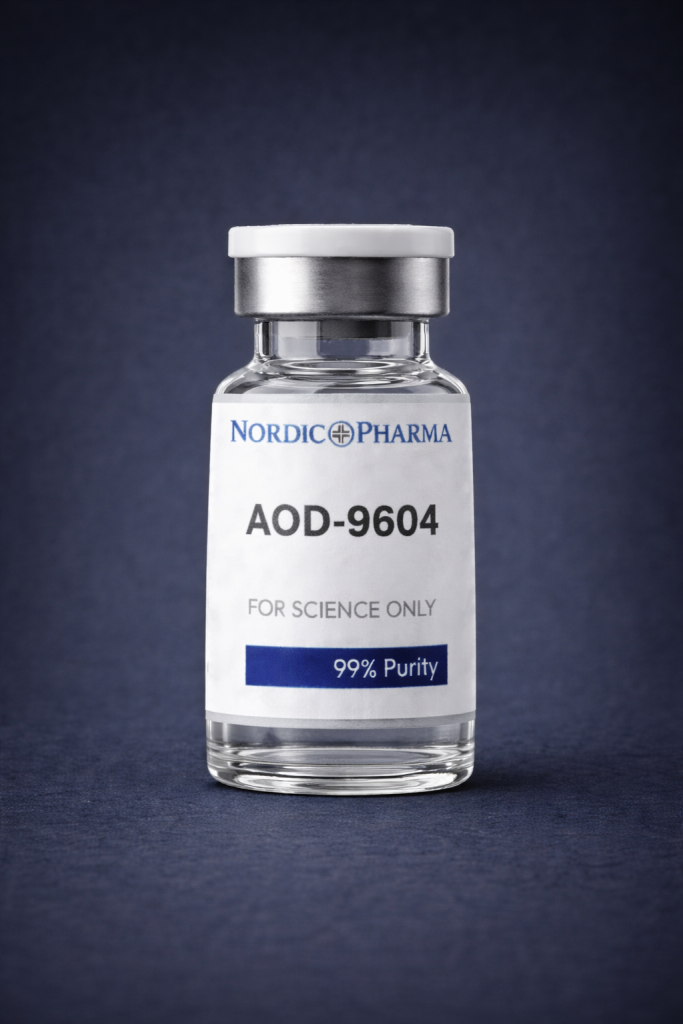
AOD-9604 | 10 vials
AOD9604 is a synthetic 16-amino acid peptide derived from the C-terminal lipolytic domain of human growth hormone (hGH), specifically corresponding to hGH residues 176-191 with a tyrosine substitution at the N-terminus . Originally developed as an anti-obesity drug candidate, it was designed to retain the fat-burning properties of hGH without affecting IGF-1 levels or glucose metabolism .
Key Specifications:
-
CAS Number: 221231-10-3
-
Molecular Formula: C₇₈H₁₂₃N₂₃O₂₃S₂
-
Molecular Weight: 1815.1 g/mol
-
Sequence: H-Tyr-Leu-Arg-Ile-Val-Gln-Cys-Arg-Ser-Val-Glu-Gly-Ser-Cys-Gly-Phe-OH (cyclic 7→14 disulfide)
-
Purity: ≥95-99% (research grade)
-
Appearance: White lyophilized powder
-
Storage: Store at -20°C
Mechanism of Action: AOD9604 exerts its effects through multiple pathways:
-
Lipolysis stimulation: Activates beta-3 adrenergic receptors in adipose tissue, triggering the release of stored fatty acids for energy use
-
Lipogenesis inhibition: Suppresses the formation of new fat deposits by inhibiting lipogenic enzymes
-
β3-AR upregulation: Increases expression of beta-3 adrenergic receptors in fat cells, enhancing lipolytic sensitivity
-
No IGF-1 stimulation: Unlike full hGH, does not elevate IGF-1 levels or affect blood glucose metabolism
Research Applications:
-
Weight management: Studied for obesity and fat reduction
-
Metabolic disorders: Potential applications in metabolic syndrome
-
Joint health: May support cartilage repair and regeneration in osteoarthritis models
-
Lipid metabolism: Investigated for effects on cholesterol and fat oxidation
Clinical Trial Data: In a 12-week randomized clinical trial, subjects receiving AOD9604 lost an average of 2.6 kg compared to 0.8 kg in the placebo group , representing approximately 1.8 kg greater loss than placebo . However, development was halted in 2007 following insignificant efficacy in a later 24-week trial .
Important Notice: FOR RESEARCH USE ONLY. NOT FOR HUMAN USE, THERAPEUTIC, OR DIAGNOSTIC APPLICATIONS.
Select Option & Quantity
Key Benefits
- High purity research compound (>98%)
- Third-party tested and verified
- Lyophilized for maximum stability
- Certificate of analysis available